OLD LEAVES FIRST
Pale all over
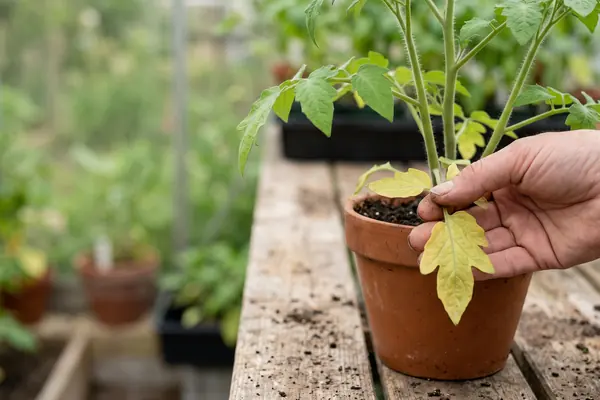
Pale yellow leaves on a spindly plant, starting with the older leaves, point to nitrogen. It washes out of soil with rain and out of pot compost with watering.
Diagnose a leaf doodlediags
Start
WHAT THE RHS SAYS
A yellow leaf is a clue, not a diagnosis.
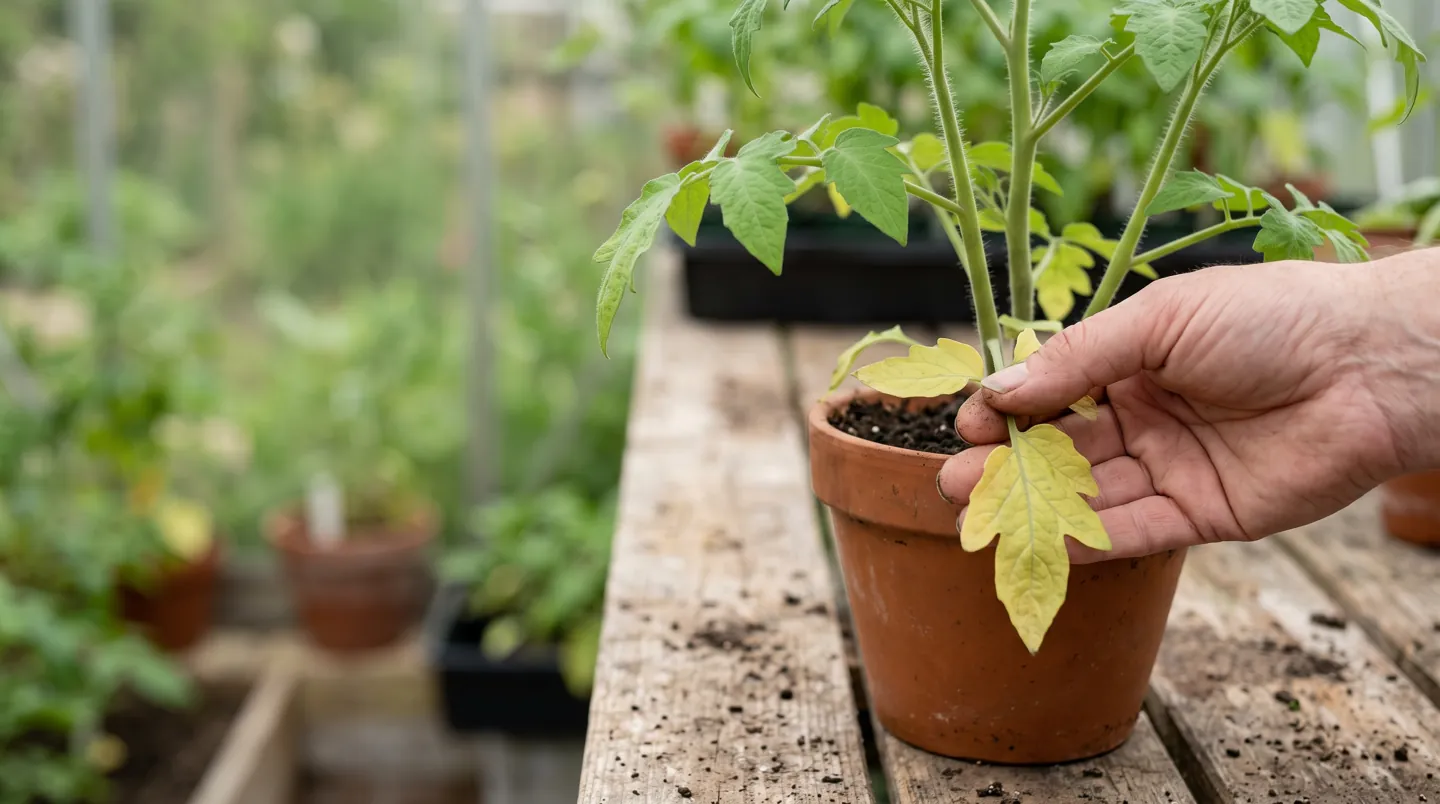
Where the symptoms start and what pattern they make can point to the missing nutrient. Often the soil has plenty, and the real problem is water, pH or a pot that has run dry of food.
OLD OR NEW?where it starts matters
Diagnose a leafKeep in mind
THE SHORT ANSWER
Three common symptoms and what
RHS advice says usually lies behind them.
OLD LEAVES FIRST
Pale yellow leaves on a spindly plant, starting with the older leaves, point to nitrogen. It washes out of soil with rain and out of pot compost with watering.
Diagnose a leafBETWEEN THE VEINS
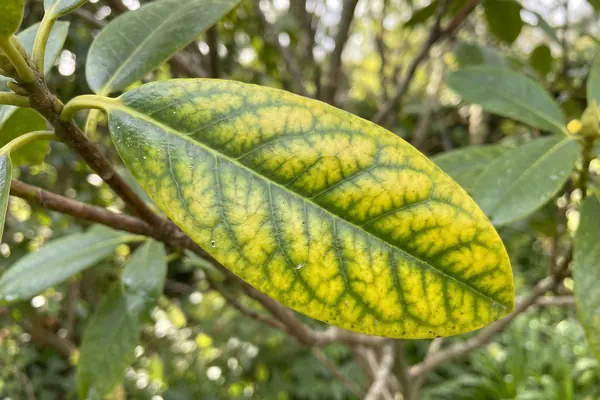
Yellowing between the veins can mean magnesium on older leaves, or iron on the youngest leaves of acid-loving plants grown on chalky or alkaline soil.
Why location mattersON THE FRUIT
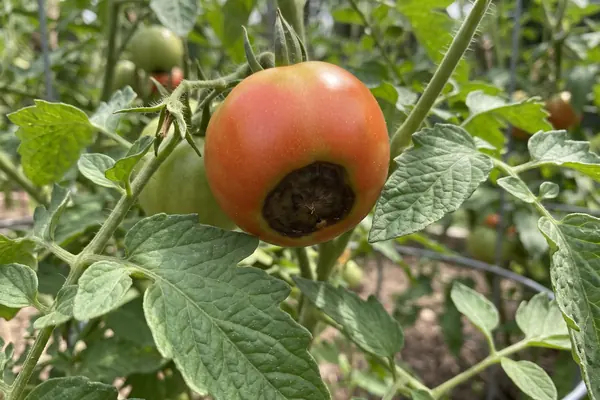
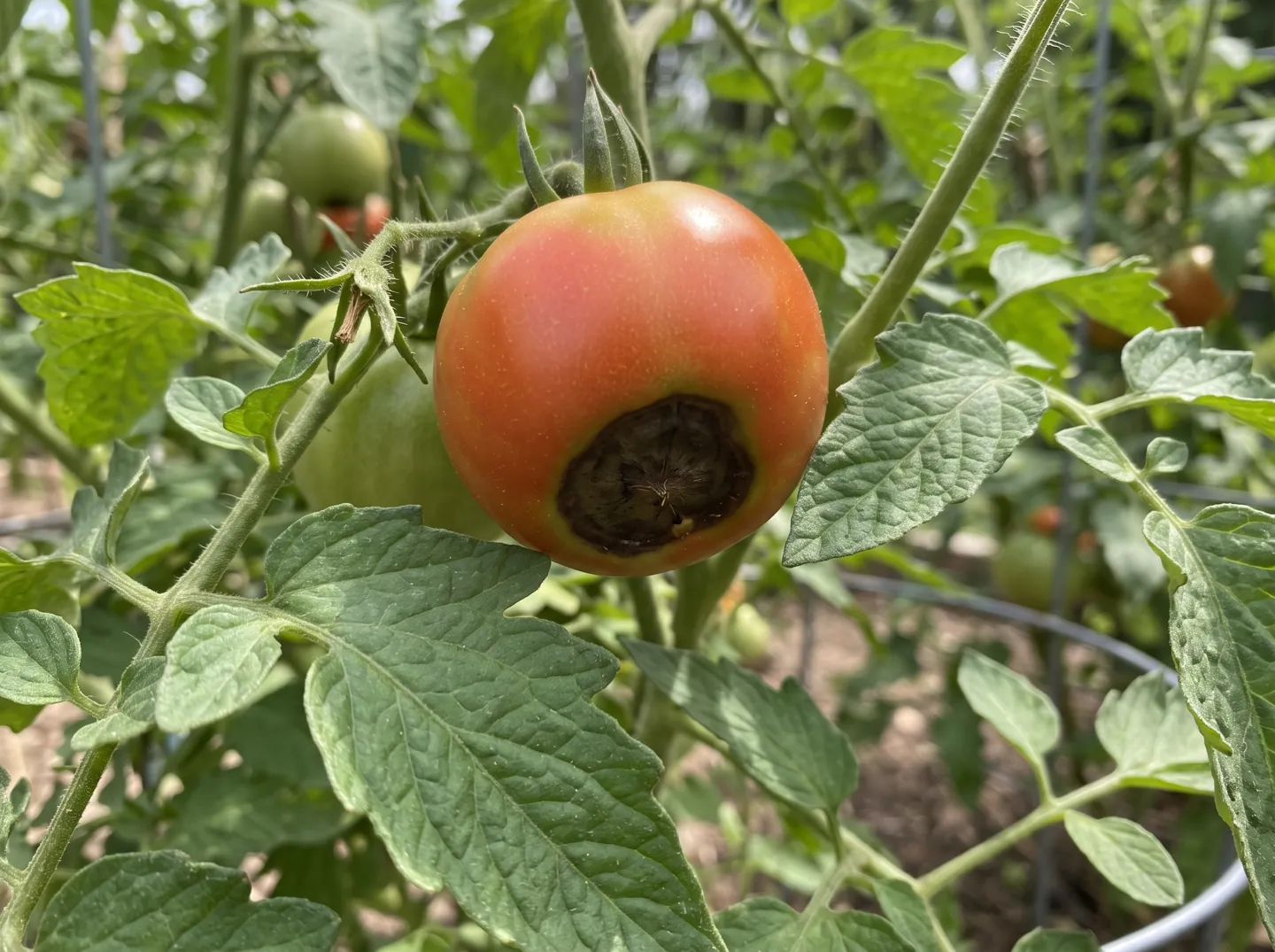
Blossom end rot on tomatoes is a calcium problem, but the RHS says soils almost never lack calcium. Uneven watering stops it reaching the fruit.
What to doA QUICK LEAF CHECK
Pick a symptom to see the likely cause in RHS advice. The bar shows how likely it is that the soil is genuinely short, rather than the plant being unable to take the nutrient up.
Based on RHS advice on nutrient deficiencies and blossom end rot. Similar-looking symptoms can have other causes, such as drought, waterlogging or poor light.
TWO NUMBERS WORTH KNOWING
One figure on what plants need,
one on how fast pot compost runs out.
17 nutrients
Nutrients needed for healthy growth
Carbon, oxygen and hydrogen come mainly from air and water; the rest come from soil. Mobile nutrients show deficiency first in older leaves, immobile ones in new growth.
ESSENTIAL NUTRIENTS · UNIVERSITY OF DELAWARE
6–8 weeks
How long potting compost nutrients last
The RHS says container plants quickly use up the nutrients in their compost, need consistent watering to take them up, and struggle in soggy compost.
CONTAINERS · RHS
The University of Delaware notes that many deficiencies look alike and can be hard to tell apart without plant tissue testing. The RHS adds that tissue analysis by specialist laboratories is very expensive.
FOUR STEPS BEFORE YOU FEED
Drought, waterlogging, poor light and poor planting can all look like a deficiency. These steps follow RHS and extension advice.
Step 1
Dry or waterlogged soil limits roots, so plants cannot take up nutrients that are there.
Step 2
Symptoms on older leaves suggest mobile nutrients such as nitrogen; on new growth, immobile ones such as iron.
Step 3
The RHS suggests testing where foliage yellows. Very acid or alkaline soils lock up some nutrients.
Step 4
Compost nutrients last 6 to 8 weeks, so container plants need regular liquid feeding after that.
WHEN THE SOIL IS NOT THE PROBLEM
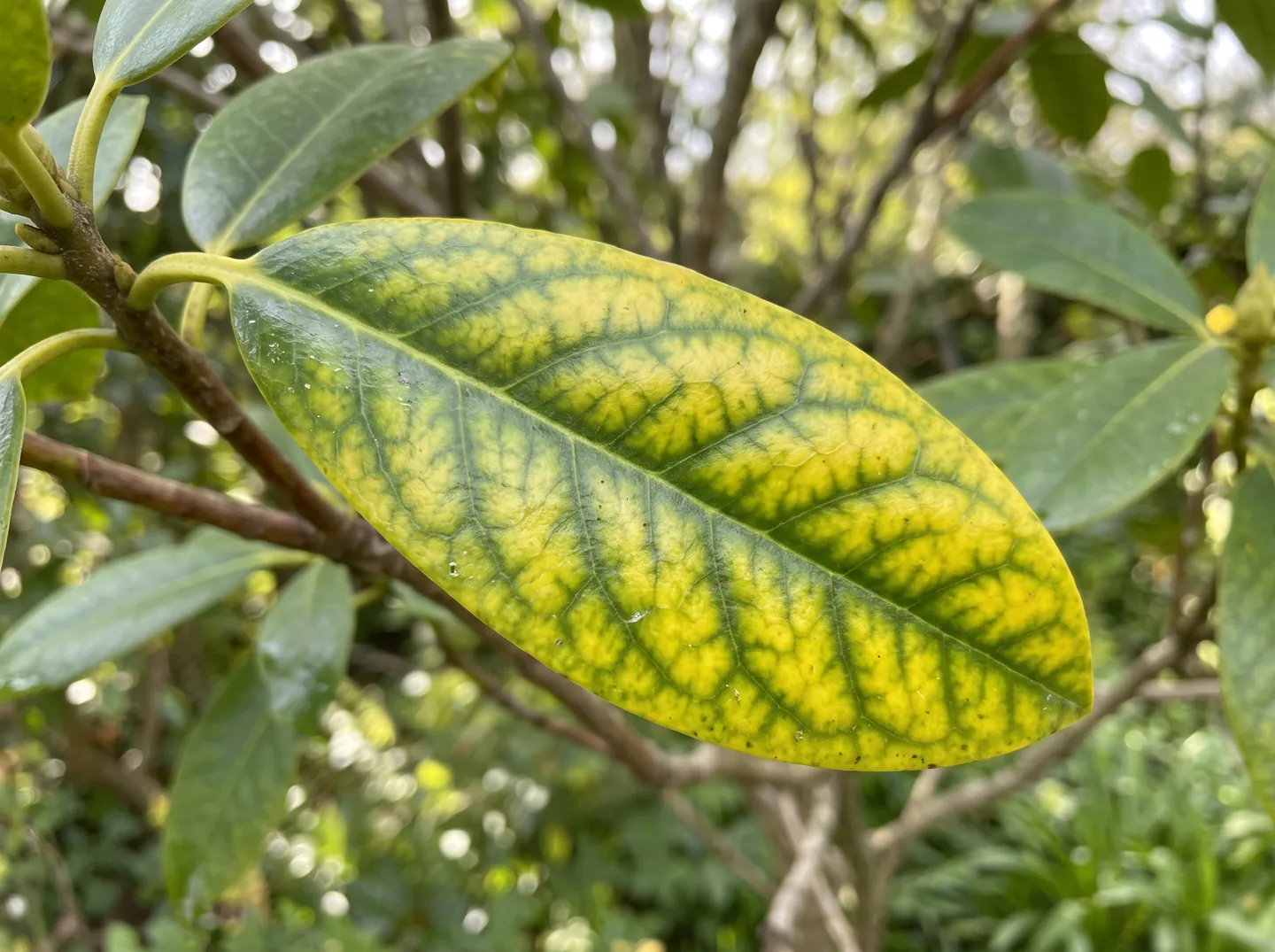
The RHS says most garden soils contain enough nutrients for healthy growth. At extreme pH, nutrients are present but in forms roots cannot use: iron and manganese on alkaline soils, and phosphates below pH 5.1.
That is why the University of Delaware advises a soil test before adding fertiliser. It can prevent excess feeding, which the RHS warns can harm plants and wash into water as pollution.
Questions
Yellowing that starts on older, lower leaves and spreads upwards is the classic sign of nitrogen deficiency in RHS advice. Nitrogen is easily washed out of soil and compost, so pot plants are especially prone.
It is called interveinal chlorosis. On older leaves the RHS links it to magnesium; on the youngest leaves of acid-loving plants it usually means iron is unavailable because the soil is too alkaline.
No. The RHS says foliar sprays of calcium salts are not effective because fruits do not absorb calcium well. Keeping the compost consistently moist protects later fruits.
The RHS says nutrients in potting compost last 6 to 8 weeks, so it advises feeding container plants regularly with a general-purpose liquid fertiliser.
Extension guidance says yes: a soil test shows nutrient levels and pH and can prevent over-feeding. The RHS notes tests within three months of liming or feeding may mislead.
Destination
ABOUT THIS NAME
doodlediags.com is part of the DoodleSale portfolio. It isn't in an auction right now, but you can ask about leasing it.